Chronic Pelvic Pain: How Diaphragmatic Breathing Can Help
Belly breathing is one of the most common interventions taught in pelvic floor physical therapy. But if you have pelvic venous disorders (PeVD), the way it's usually cued might actually be working against you.
Often mislabeled as diaphragmatic breathing, belly breathing is frequently taught with little attention to the diaphragm itself or to how breathing affects blood flow. These are two things that matter a lot when you're living with PeVD.
Your core is a piston — and a sump pump
Think of your torso as a cylinder, with a piston moving up and down inside it. The diaphragm, your main breathing muscle, forms the top. The pelvic floor forms the bottom, the abdominals wrap around the front and sides, and the back muscles support you from behind. Together, these four regions coordinate to stabilize your spine and pelvis, creating an internal pressure system that helps you cough, laugh, or lift something heavy.
Our “piston” and sump pump ©Burrell Education
What is Supposed to Happen When We Breathe?
When you inhale, the diaphragm flattens and moves downward, gently pushing the abdominal organs lower. The rest of the piston adapts: the pelvic floor and abdominals lengthen, and the rib cage expands in all directions. Your belly, sides, chest, and back all widen and expand in a 360 degree motion. The pelvic floor is not gripping; it is lengthening downward to make space.
As you exhale, everything recoils and resets. The ribs drop downward and settle over the diaphragm, creating space for it to rise and regain its dome shape. Your abdominals gently wrap inward, and the pelvic floor lifts. Nothing is forced. It is a natural rebound, like a spring returning to shape.
The movement of the diaphragm during diaphragmatic breathing: down on your inhale, up on your exhale. Your pelvic floor follows the same pattern. © SciePro
But this "piston" does more than help your body stabilize. It also works as a sump pump—something that's especially important for people with PeVD, whose veins don't function as they should. Each time the piston moves up and down, it helps move blood out of the pelvis and legs and back toward the heart, a process known as venous return.
How well this piston works depends on the way you breathe, the position of your pelvis, the movement of your ribcage, and how effectively you can activate your deep abdominals.
When this system moves well, it eases pelvic symptoms by keeping blood flowing back toward the heart. But when it doesn't, blood that should drain from the pelvis can pool instead, increasing symptoms such as pelvic pressure and a feeling of heaviness.
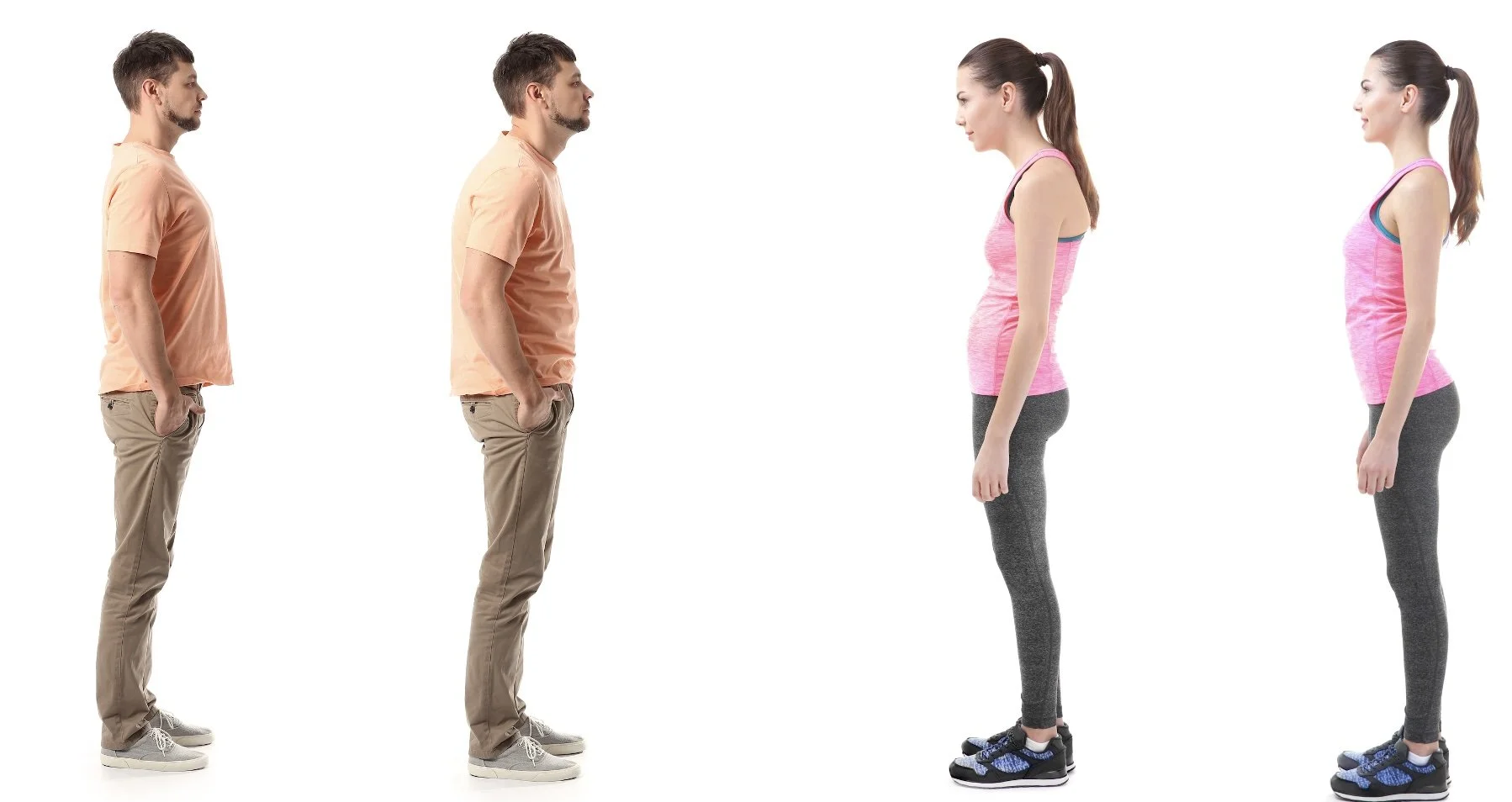
Examples of abnormal postures that can limit sump pump function and contribute to symptoms of PeVD
Why Belly Breathing Can Backfire
For about two hundred years, we were taught that breathing drives circulation through a pump powered by the inhale. We were told to take a big breath in, let the belly expand, and push the blood upward. Many breathing cues still follow that model. Newer research suggests otherwise.
During inhalation, pressure in the abdomen rises, and drainage from the pelvis and legs briefly slows down. This pattern appears whether someone is lying down or standing. On its own, this type of belly breathing can actually make symptoms of pelvic venous disorders (PeVD) worse.
That matters a great deal for my patients. If you have PeVD symptoms and have been coached to take big belly breaths—inhale, push the belly out, and pay little attention to the exhale—you have been emphasizing the phase when pelvic pressure is highest and venous drainage is lowest. So, when someone tells me they have been “doing their breathing” for a year and feel worse afterward, they are not bad at breathing. They were taught to focus on the wrong half of the breath.
What we DON’T want: belly breathing. Notice the breath staying in the belly instead moving in all directions of ribcage, chest, and abdomen).
To Improve Venous Return, Focus on the Exhale
Studies of deep diaphragmatic breathing show that for good venous return, the exhale matters most. It helps move blood into the inferior vena cava, the body’s largest vein, which carries blood from below the diaphragm—your legs, pelvis, and abdomen—back to the heart. The inferior vena cava is attached to the diaphragm, so it changes shape during inhalation and relaxes open during exhalation. The diaphragm's movement matters here. How fully the piston travels up and down has a strong effect on how well the pelvis and legs drain.
How I Want You to Breathe
The goal is not to have a perfect technique that you have to monitor all day. The goal is to breathe well, with a piston and sump pump that move freely in both directions—up and down—from your diaphragm to your pelvic floor. Here are some tips to get you started:
· Let your inhale stay soft. Your belly, sides, and back should expand in all directions. The pelvic floor lengthens here, and nothing grips or adds tension.
· Make the exhale your focus. Aim for a long, complete, unhurried exhale—about 6 to 8 seconds (if that feels comfortable). Let the ribs in front close as you breathe outward, so your diaphragm and pelvic floor can rise together. Try to “sigh” your air out as though you were fogging up a mirror.
· Stop holding your breath. When you notice yourself doing it (e.g., during email, traffic, or stressful moments), don’t panic. Get in the habit of taking a few diaphragmatic breaths to reset.
· I often practice this with patients in inverted positions, with the hips above the heart, to help support venous return.
A Favorite Exercise for Managing Venous Pain: Inversion Breathing
© 2026 Dr. Julie Baron LLC
Inversion breathing, legs elevated on a small step (or resting on the floor for a gentler or more accessible version).
Position yourself on all fours. You can put your feet on the wall for additional stability if needed.
Keep your knees positioned under your hips and your elbows positioned under your shoulders. Don’t drop your sternum by gripping through your upper abdominals.
Push your hips back slightly to feel a "widening" of your sit bones.
Gently press through the floor with your forearms and palms to push your ribcage back in space (toward the ceiling). Maintain this position whether you are inhaling or exhaling.
As you inhale through your nose, you should feel some expansion through your upper chest and mid-low back. Try to sense the lengthening of the pelvic floor between your sit bones.
Exhale through your mouth with a “sigh”. Feel your side abdominals turn on as you exhale, and pause at the bottom of that breath out.
As you inhale again through your nose, you should feel some expansion through your upper chest, back, and down toward your pelvic floor muscles.
Repeat 10-15 breaths x 1-2 rounds.
Remember: don't overextend your back. If your hands are too far out from you it will be a bit more uncomfortable and lead to more back extension.
© 2026 Dr. Julie Baron LLC
What we want: inversion diaphragmatic breathing, pressing through the forearms to open up the back and pelvis—think of gently rounding into an "angry cat."
© 2026 Dr. Julie Baron LLC
What we don't want: too much back extension. Arching here limits your venous return, increases belly breathing, and can aggravate chronic pelvic pain symptoms.
So many providers still don't know that PeVD exists or that it can be a cause of chronic pain. It can be genuinely hard to be a patient with this condition, and if you've felt dismissed or unheard, that's not your imagination.
Diaphragmatic breathing is something that you can start today, but it works best alongside the right care. You deserve a full workup with a provider who understands pelvic venous disorders.
Look for a pelvic floor therapist and an interventional radiologist or vascular surgeon in your area who doesn't just treat PeVD, but takes the time to address your symptoms and needs as an individual.
Lee K, Kim H, Cho S, Joh JH. Change of venous return after diaphragmatic deep breathing. Ann Phlebology. 2022;20(2):95-99. doi:10.37923/phle.2022.20.2.95
Raju S, Kendrick S, Stone RH, Saleem T. Venous flow phasicity is not caused by the thoracoabdominal pump, but results from luminal deformation of the inferior vena cava caused by respiratory diaphragmatic movement. J Vasc Surg Venous Lymphat Disord. 2026;14(4):102467. doi:10.1016/j.jvsv.2026.102467
